Make Nights Easier with the Best Puppy Sleeping Arrangements for Comfort & Training
Bringing home a new puppy is an incredibly exciting milestone, but the sleep deprivation that often accompanies those first few weeks can feel overwhelming.
Adjusting to a new schedule is a challenge for everyone involved, but rest assured that consistency is the key to success.
When your new puppy rests well, house training becomes much more manageable, the frequency of nighttime whining often drops, and overall daytime behavior tends to improve significantly.
Establishing the right puppy sleeping arrangements provides your pet with a secure, comfortable space to settle while they learn your home, your family schedule, and your household rules.
A few intentional choices can transform bedtime from a stressful experience into a steady, predictable routine, so it helps to start by understanding exactly what your puppy needs to feel safe throughout the night.
Key Points
- Consistency is Essential: A predictable bedtime routine helps puppies transition from play to sleep, improving their overall behavior and making house training much easier.
- Safety and Comfort: Choosing the right sleep setup—whether a crate, puppy pen, or dog bed—should prioritize your puppy’s security while ensuring the space is appropriately sized to prevent accidents.
- Adjust Expectations: Understand that night waking and crying are normal for young puppies; they require patience, calm, and a gradual approach as they physically mature.
- Optimize the Environment: Create a calm, quiet, and temperature-controlled sleeping space to help your puppy settle down, and keep any necessary nighttime potty breaks brief and boring to discourage play.
What do puppies need to sleep well and feel secure
When you think about puppy training, sleep setup matters as much as meals and potty breaks. Young puppies need comfort, safety, routine, and some sense of closeness, especially at night.
Why do young puppies sleep so much?
Puppies sleep a lot because they are growing fast and learning all day. Short bursts of play can wear them out, so long naps are normal.
The American Kennel Club’s guide to puppy sleep notes that an 8-week-old puppy often needs 18 to 20 hours of sleep a day. That sounds like a lot, but it fits their developmental stage. They are using energy for growth, developing new skills, and processing a constant stream of new sights and sounds.
Because of that, a tired puppy may look wild instead of sleepy. Zoomies, biting, and cranky behavior often mean they need rest, not more activity. If bedtime comes after too much excitement, settling down gets harder.
Night waking is also normal in the early weeks. Small bladders, new surroundings, and changing sleep cycles all play a part. Your puppy isn’t trying to make life hard; they are simply still learning how to rest in a new place.
Why a new home can feel scary at bedtime
A new puppy has left littermates, familiar smells, and the only routine they knew. When bedtime arrives, the house gets quiet, and they realize they are alone. That experience can feel overwhelming and strange for a young animal.
Crying at night often comes from stress, not stubbornness. Your puppy may miss the physical warmth of their littermates, or they may not yet understand that you will return in the morning.
As a result, the best puppy sleeping arrangements prioritize comfort and security. A calm room, a familiar blanket, and hearing you breathe from nearby can help more than people expect.
Once you see bedtime from your new puppy’s perspective, choosing a setup that minimizes nighttime crying becomes much easier.
The best puppy sleeping arrangements for your home
The best sleep setup is the one that keeps your puppy safe, supports successful potty training, and works with your home environment. There is no single perfect answer that fits every dog.
This quick comparison can help you narrow down your options for the best choice for your new puppy.
| Setup | Often works well for | Watch for |
|---|---|---|
| Crate | Safety, routine, and potty training | Wrong size or forcing it too fast |
| Puppy pen | More room, gentle confinement, potty training | Too much space can lead to accidents |
| Dog bed | Comfort and accessibility | Requires thorough puppy-proofing |
Most families do well with a crate, a pen, or a comfortable dog bed in the bedroom for the first few weeks. Some owners choose to move from one option to another as the dog matures.
Crate sleeping, when used the right way
A crate can help a puppy settle by providing a small, predictable sleep spot. It also helps many dogs learn to hold their bladder for short periods overnight, which is essential for effective potty training.
Size matters. The crate should be big enough for your puppy to stand up, turn around, and lie down comfortably, but not so large that one end becomes a bathroom.
Add a washable mat or thin bed if your puppy does not chew fabric.
A crate should never be used as a form of punishment. It needs to feel safe, not like a timeout box. You should rely on positive reinforcement to build a good association with the space. If you plan to use one, these crate-training basics for new puppies can help you start without making bedtime harder.
Sleeping in a puppy pen or gated space
A puppy pen gives more room than a crate, which some dogs prefer at first.
It can also work well if your puppy gets upset in a closed crate, or if you want extra space for a bed and a little room to move around.
Still, more room can slow down potty training if the pen is too large. Some puppies will sleep on one side and relieve themselves on the other. If that happens, shrink the space or switch to a smaller overnight setup.
A gated laundry room or kitchen can work for older puppies, but only if the area is truly puppy-proofed. Electrical cords, rugs, shoes, and chewable items need to be removed to keep your pet safe.
Sleeping near your bed
Many puppies settle faster when they sleep close to their people. Bedroom co-sleeping is a popular approach, where a crate beside your bed or a puppy bed near your own can lower stress in the first few nights.
Your specific crate location is important; keeping them close helps them feel secure enough to sleep, which is a win for both of you.
Later, if you want to transition your dog to a separate sleeping area, you can move the setup a little at a time until they are comfortable in their own space.
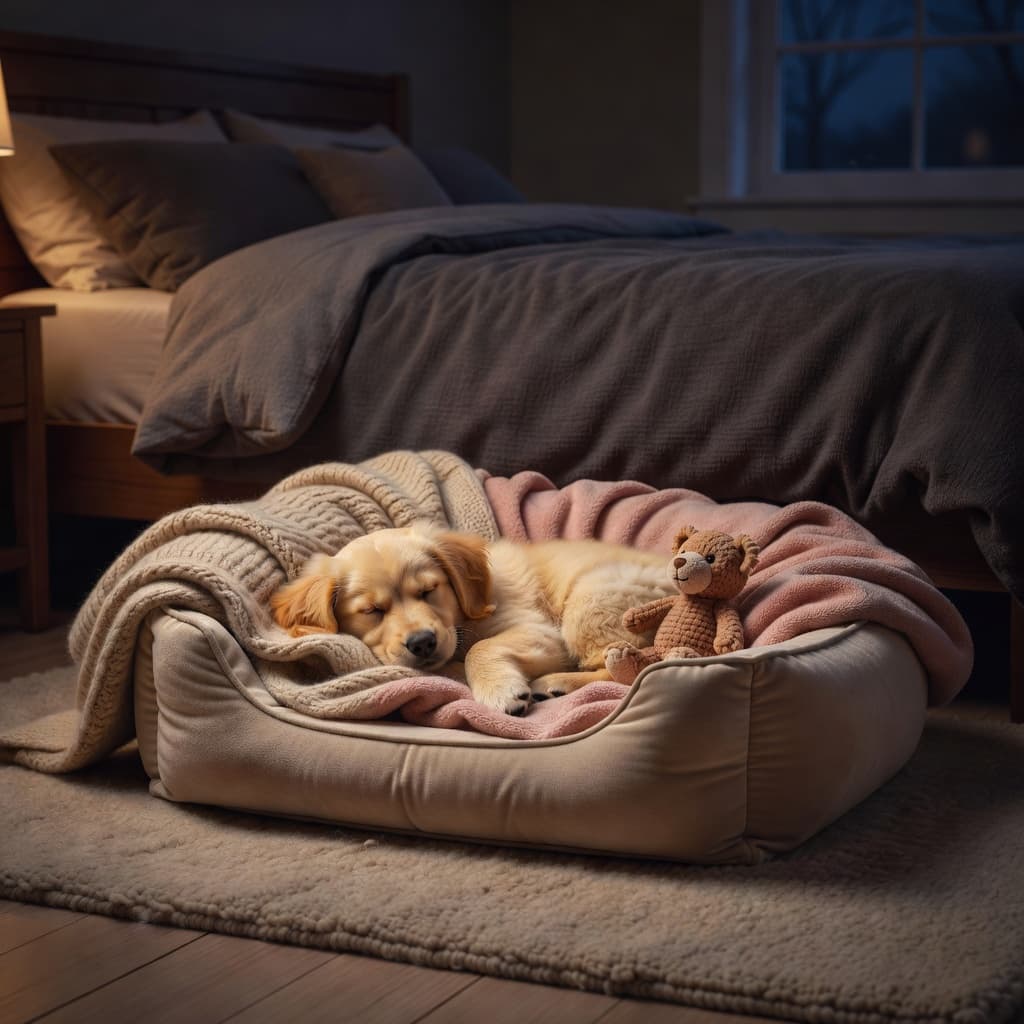
How to make a puppy’s bed feel safe, cozy, and practical
Fancy pet gear is not what makes a puppy sleep well. A good setup is plain, clean, and safe.
What to put in the sleep space, and what to leave out
Start with simple, washable bedding. A flat crate pad, a fitted mat, or a folded towel often works better than thick, fluffy bedding. It stays in place and is easier to clean after accidents.
Some puppies like one small comfort item, such as a soft toy. Others will chew and shred it within minutes. If your puppy swallows fabric, pulls stuffing, or tangles in blankets, take those items out. Safety matters more than making the bed look cute.
Water needs depend on your puppy’s age and setup. Most puppies do well when they drink normally in the evening, then go out for one last potty break before bed.
If your puppy is in a larger pen for part of the night, use a stable bowl that cannot tip easily.
Using sound, light, and temperature to help a puppy settle
A calm room helps. Keep the lights low, skip loud TV, and avoid rough play right before bedtime. Using white noise or a quiet fan can soften random household sounds and help some puppies relax.
Temperature matters too. Puppies settle better when they are not too warm or too cold. A room that feels comfortable to you is usually a good starting point.
If you want a simple model for fitting naps and nighttime together, this healthy puppy sleep routine gives a helpful overview. The main point is consistency.
When the room feels the same each night, your puppy learns that it is time to rest.
A bedtime routine that helps puppies settle faster
Nighttime should be predictable and a little boring. Establishing a consistent bedtime routine helps a puppy switch from play mode to sleep mode more effectively.
Managing nighttime potty breaks before lights out
Take your puppy out for their nighttime potty breaks right before bed, even if they went out just a short time before. Use the same potty spot whenever possible, keep your voice calm, and give them a minute to sniff and go.
After that, head straight back inside and into the sleep space. Do not add play, treats, or a burst of attention unless you are rewarding the act of pottying itself. You want your puppy to learn that this trip is strictly part of the bedtime routine, not a second evening party.
A steady schedule also supports house training.
These successful potty training routines for puppies fit well with a plan that prioritizes nighttime consistency.
Why consistency matters every night
Puppies learn by repetition. If your schedule shifts all over the place, your puppy has no clear signal for what comes next.
Try to keep the same order each night: quiet time, the final potty trip, lights low, then bed. If more than one person handles the evening transition, use the same rules.
The puppy should get the same message from everyone to maintain consistency in their training.
A simple, reliable routine builds confidence. Your puppy starts to trust the pattern, and that trust makes it much easier for them to settle down for the night.
Common sleeping problems, and how to handle them gently
Rough nights happen with almost every puppy, and the first night can be particularly challenging as your new companion adjusts to a strange environment. Calm responses work better than harsh ones because fear worsens sleep.
What to do when a puppy cries at night
Pause and listen before you respond. A few seconds of barking and whining while your puppy gets comfortable is not unusual.
Ongoing distress often means they need to potty, feel scared, or are too wound up. To provide extra comfort, consider using a snuggle puppy toy that mimics a littermate’s heartbeat.
If it has been a while since the last trip, take your puppy out for nighttime potty breaks in a quiet, matter-of-fact way. Keep the lights low, skip play, and use positive reinforcement by offering quiet praise when they finish.
Go right back to bed after to ensure they understand that these moments are strictly for business.
Nighttime potty trips should feel dull and brief. That helps your puppy learn that dark hours are for sleeping.
Young puppies may also not be able to sleep through the night for a while. Zoetis Petcare explains that continuous overnight sleep often does not happen until around 16 to 20 weeks.
Keep in mind that your puppy is still learning, especially if you are navigating the first night together.
How to respond to accidents without making things worse
Clean accidents calmly and move on. Scolding after the fact only adds stress, and it does not teach your puppy what to do next time.
Instead, look for the reason. Was bedtime too late? Was the sleep space too big? Did your puppy drink a lot right before bed and miss the final trip outside? A small change in timing often helps more than a big reaction.
Use an enzyme cleaner so the smell does not pull your puppy back to the same spot. Then tighten the schedule for a few nights and watch what improves.
How to stretch overnight sleep in small steps
Longer nights come with age, routine, and practice. Most puppies get there in small steps, not all at once. The goal is consistent progress toward sleeping through the night as they mature.
If your puppy has been dry overnight for several days, wait a little longer before the next trip. Keep changes gradual.
Fifteen or twenty minutes can be enough to build progress without setting your puppy up to fail.
Daytime habits matter too. Puppies who nap well during the day, get a calm evening, and follow the same bedtime routine often settle better at night.
Better sleep is part of puppy training, and steady puppy sleeping arrangements give that training a fair shot.
Frequently Asked Questions
Where is the best place to keep my puppy’s crate at night?
Many experts recommend keeping the crate in your bedroom for the first few weeks. Being close to you helps the puppy feel secure and less lonely, which often reduces nighttime crying and anxiety.
How do I know if my puppy is crying because they need to potty or just to get attention?
If your puppy starts crying after several hours of silence, it is likely a legitimate need to go outside. Try to respond in a calm, matter-of-fact way, take them out to potty without play, and return them promptly to their sleep space.
Is it normal for my 8-week-old puppy not to sleep through the night?
Yes, it is perfectly normal. Most puppies do not have the physical capacity to hold their bladder through the entire night until they are between 16 and 20 weeks old, so you should plan for at least one potty break.
What should I do if my puppy keeps having accidents in their crate?
An accident in the crate usually means the space is too large, as the puppy is sleeping on one side and using the other as a bathroom. Temporarily reduce the size of the crate using a divider or a smaller, more contained sleep area until they gain better bladder control.
Our Conclusion
Effective puppy sleeping arrangements should always be safe, calm, and consistent.
While your specific setup might evolve as your dog grows, the fundamental needs remain the same: comfort, a clear routine, and a dedicated space that feels secure.
Those first nights with a new puppy can feel long, but they pass much faster when you remain patient and keep bedtime simple.
By establishing a reliable sleep schedule, you support successful house training, encourage better behavior, and ensure your pet stays happy.
With the right puppy sleeping arrangements in place, you will create a foundation for restful nights and a healthy relationship with your dog for years to come.